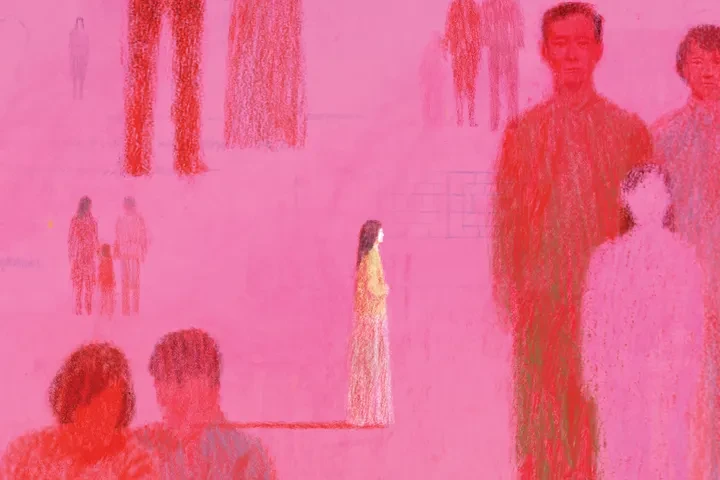
The Long Search Home: After 14 Years and Two False Matches, an Adoptee Finds What She Longed For
In May 1993, an infant girl was found abandoned on a roadside in Ma’Anshan, a city in eastern China’s Anhui Province. Per local accounts, her paternal grandfather set her down on that street and walked away, leaving no note or explanation for his choice. No one knows how long she lay alone before a passerby found her and brought her to the city orphanage.
In August 1994, a white American woman adopted the baby girl and brought her to the United States, giving her an English name. The girl’s Chinese name is Youxue.
In spring 2010, when Youxue was a high school sophomore living in Dallas, Texas, she made the decision to start searching for her birth parents. She knew the journey would not be easy: as an international adoptee, born from the informal, unregulated circumstances that surrounded most child relocations in 1990s China, there was a very real chance she would never find her biological family. But her adoptive mother supported her fully, and found a local searcher in China through Yahoo Groups—one of the earliest online forums where adoptees connected with each other and resources.
The searcher posted flyers with Youxue’s photo and information across high-traffic areas of Ma’Anshan, then visited the police station listed on her original abandonment certificate. There, they accessed old records and found a short note that had been left with the baby when she was found.
By September, multiple families had reached out in response. One seemed like a promising match: the family had an older daughter and a younger son, matching the pattern many expected. Looking at photos of the family, Youxue thought she could see a resemblance to herself. She sent off a buccal swab of cheek cells and a few strands of hair for a maternity DNA test, and waited.
In November, her adoptive mother texted her the news: the DNA results came back positive. It was a match. Overjoyed, Youxue wanted to shout the news to every friend and family member; for the first time in her life, she felt whole. She started Mandarin lessons and began texting her newfound birth parents, both sides gushing that they loved each other and could not wait to meet.
But the truth broke during Youxue’s 2011 spring break, when her birth father told her her birthday was September 11, 1994. That date was impossible—Youxue had already been adopted and living in the United States for months by then. She pointed out the error, but he insisted: Mother remembers the birth date correctly.
After reaching out to the DNA testing company, Youxue learned they had accidentally sent her another person’s results. This was not her biological family. Devastated, she deleted every message and photo from the match, even though she knew she might regret it later and the materials could have helped another adoptee. She could not bear to hold onto them. To crave something so deeply is to leave yourself open to pain, and choosing to search means opening your heart to heartbreak.
Halfway across Anhui Province, in a small rural village, another mother had long begged her adult daughter and teenage son to help her search for the two daughters she had been forced to give up decades earlier. She had always wanted to look for them, but she only spoke her local dialect, had almost no access to technology, and no formal education. She never knew where to start, and no one around her knew how to help.
Decades earlier, the circumstances that forced this choice were set in motion by China’s one-child policy. Enacted in the late 1970s, the government’s population control program turned family planning into a state-mandated process that dictated which children could be born. In the 1980s, rural parents were only allowed to have a second child if their first was a daughter. Families that broke the rules faced crippling fines, harsh penalties, and in some cases forced sterilization or physical violence.
Today, more than 82,000 Chinese adoptees live in the United States, the vast majority adopted between 1999 and 2016. More than 60% of these adoptees are girls, and most adoptive parents are white, wealthy, and well-educated. Because child abandonment is illegal in China, very little official documentation connects adoptees to their birth families, making searches incredibly difficult.
In summer 2011, just a few months after the devastating false match, Youxue and her adoptive mother traveled to China to search again. Through a friend who had been adopted from the same orphanage and already reunited with his birth family, they connected with a new searcher who, alongside a local radio host, had already helped pull off multiple successful reunions. With access to the old police records and the note the first searcher had found, they finally had enough context to move forward.
In Ma’Anshan, Youxue gave interviews to newspapers, online outlets, and even a local TV station that ran her segment on all city buses. She was searching for any family that had given up a daughter between August 1993 and January 3, 1994, the window her orphanage papers listed for her birth. She completed blood tests, and that summer, one family matched every detail. Both parents shared her blood type, they even knew the exact text of the note left with the baby—they said they had written that note years before, in a moment of desperation.
Accompanied by a news crew, Youxue and her adoptive mother drove in a caravan to the family’s home in a neighboring township. No one could stop crying. But the second Youxue saw the mother step out of her house, she knew something was wrong. They looked nothing alike.
Youxue had long suspected her official paperwork was inaccurate. When she was adopted in 1994, she was far taller than the seven-month-old age listed on her documents. Even accounting for developmental delays, common for malnourished children in orphanages, she was clearly older than the paperwork claimed—she also had far more teeth than a typical seven-month-old infant.
Now the truth was clear: the note, the police records, the whole story—all of it belonged to another baby. In 1993, a girl had been left on the steps of a Ma’Anshan police station, but that girl was not Youxue. That girl, if she is still alive, likely has Youxue’s paperwork, because Youxue has hers. Everything Youxue had ever been told about her origins was wrong. The only fact she could count on was the name of the orphanage her adoptive mother had brought her from. Youxue kept searching.
In fall 2012, Youxue’s new searcher reached out with an opportunity: someone had seen her TV interviews and wanted her to appear on Wait for Me, a popular Chinese television program that helps connect missing children with their families. She appeared on the show later that year, the first non-Chinese citizen ever featured. One family came forward, but they were ruled out by a blood type mismatch.
Even as Youxue kept studying Mandarin, her hope began to fade. Years passed. By 2020, as COVID-19 outbreaks locked down borders across the world, Youxue could not ignore the fact that her birth parents were aging, and time might run out before she found them.
A woman in Anhui Province scrolling through social media came across one of Youxue’s old online interviews that year. She did not recognize the woman at first, until she realized the woman on her screen was her niece. Her sister—Youxue’s biological mother—had been searching for Youxue for decades.
In recent years, a growing number of Chinese American adoptees have begun searching for their birth families, most for the first time as adults. Empowered by consumer DNA tests like 23andMe and AncestryDNA, they are finding relatives in ways that would have been impossible just a decade ago. One adoptee the author spoke with located her birth parents just days after uploading her DNA. Another, named Alyse, found a cousin who was also adopted and living in the United States, after a 14% genetic match popped up. When they first met over FaceTime, the two sat in silence, studying each other’s faces. “Actually seeing each other was really surreal,” Alyse said. Like many adoptees now rediscovering relatives across continents, their conversation soon turned from family history to the eerie parallels of their lives: both were pursuing doctorates, both filled their free time with art: knitting, crocheting, painting. The similarities felt like proof of some invisible thread that had always connected them.
Every year, new technology narrows the gap between international adoptees and their biological families. Launched in 2009, China’s National Reunion Database allows anyone to visit a local police station and submit their DNA to search for missing family members. In 2016, China launched the expanded Reunion System, which adds mapping technology and partnerships with Chinese social media giants like Douyin to share information that can help children and families find each other. Similar to the U.S. Amber Alert system, the Reunion System uses nearly 30 mobile apps and media outlets to push information directly to users’ phones. China has also set up free DNA blood collection sites across the country. These new efforts reflect the government’s push to resolve high-profile abduction cases and respond to a crisis that has drawn decades of international scrutiny.
In April 2024, Youxue learned about the National Reunion Database during a virtual GED Match Day, an online event that helps adoptees consolidate their DNA files in one centralized place. The fact that Youxue had never heard of the database before underscores how little known it remains outside of China. The next month, working with the Nanchang Project, a nonprofit that helps Chinese adoptees find their birth families, Youxue mailed her DNA sample to the database.
Youxue received confirmation that her DNA had arrived in China on July 14. Forty-eight hours later, a remarkable coincidence: a woman in Anhui Province submitted her own DNA to the National Reunion Database the very same weekend. That woman was Youxue’s biological mother.
On August 20, Youxue received a congratulatory email from a Nanchang Project volunteer. Youxue had a definitive match with both of her biological parents. At first, she could not believe it—years earlier, a testing company had sent her a false positive. But matching with both parents at once gave her a new level of certainty she had never felt before.
A volunteer gave Youxue her parents’ names. The next morning, she received an Instagram message from an unknown account: it was a friend of her first cousin in China, reaching out to connect.
In April 2025, Youxue and her adoptive mother flew to Shanghai. Her biological older sister met them at the airport with her husband and young son. Before the trip, her sister had asked Youxue to choose an English name for the boy—Youxue’s biological nephew. Youxue chose Henry. Crying and holding two massive bouquets of flowers, her sister hugged her tightly while her brother-in-law held a hand-painted sign that read “Welcome to China.” They spent the next day walking around Shanghai, catching up on 31 years of lost time.
Youxue has two older sisters and one younger brother. Her family kept the eldest daughter, and was forced to give up the second, then the third: Youxue. No one has been able to track down the second-eldest daughter, and her fate remains unknown. Youxue’s family had been pressured by her paternal grandparents to have a son, and the local family planning office in their region was extremely strict. Her real birth date is eight months off from the wrong date listed on her original orphanage papers. Youxue shares her mother’s skin tone and the distinct faint line across her cheeks, and she looks just like her brother and father—they even have the same warm smile.
After a few days in Shanghai, her sister’s family drove them to the family’s village, where her parents still live. It turned out Youxue was never from Ma’Anshan at all: she was born in a poorer village in nearby Wuhu. It was common for parents abandoning babies to leave them in busier, bigger nearby cities, where they had a much better chance of being found quickly and adopted. Her parents and brother met Youxue and her adoptive mother outside the local village hotel. Her father, red-faced and sobbing, wore a blue polo shirt, and her mother wore a red velour tracksuit. They held each other tight, and hugged Youxue’s adoptive mother, thanking her for raising their daughter. Youxue later said her father cries much more easily than her mother.
Cousins, aunts, and uncles were all waiting for her in the village. The family hired caterers, set off fireworks when Youxue walked down the main street, laid out a red carpet, and gave Youxue and her adoptive mother red cashmere scarves to wear. The entire village was invited to a celebration. An enormous banner hung over the street that read “Welcome home, daughter!” in gold Chinese and English lettering. Ten tables, 22 dishes, a full feast to welcome her home. Many villagers did not believe Youxue had been adopted to America until they met her white, blond adoptive mother. The family drove her around the village, showing her the fish and crab farms they worked for decades, the still water reflecting the milky blue of the sky. Watching her parents laugh together as they rode side-by-side on a moped, Youxue could picture what their young love had looked like, all those years ago.
One of Youxue’s aunts could not stop crying. She had also been forced to give up two daughters decades earlier, and desperately wants to find them.
Youxue’s parents mostly speak their local dialect, though her mother has learned a small amount of Mandarin. They worked as farmers for most of their lives, and never had the opportunity to go to school. Even though Youxue speaks conversational Mandarin, she still needs a translator to communicate with them at length.
Most rural Chinese families did not have access to consistent clean water until the 2000s, and many lived in abject poverty in the 1990s. “We’re so sorry,” every member of her biological family told her: her parents, her aunts and uncles, her siblings. But Youxue says “forgive” is not the right word for how she feels about the circumstances of her abandonment. She does not blame them: “I don’t grieve for just myself. I grieve for them too.”
Every year, more Chinese adoptees send off DNA kits, upload their stories, and submit their DNA to the National Reunion Database. As databases grow and social networks connect people across borders, the chance of reunion grows larger every day. Chinese police now use not only DNA analysis but also facial recognition to help families reunite, and many adoptees post their stories on Xiaohongshu (RedNote), a Chinese social media platform similar to TikTok. What once felt like an impossible, lonely quest now feels like a growing movement. For Youxue and thousands of other adoptees, every reunion proves that the past is not sealed off forever.
After 14 years of searching, three of those years spent searching on the ground in China, Youxue is now in regular contact with her birth family. Her face brightens when she talks about her story. She will return to Wuhu in February to spend Chinese New Year with her newfound family. “Even before I met my biological family, I loved them,” she says. “I’ve loved them throughout this entire process.” Youxue now runs a nonprofit that creates online support groups and in-person meetups for other adoptees. In addition to her missing second older sister, she is still searching for two female cousins who were also abandoned decades earlier.
What Say You?
Share your thoughts on this story in the comments below. Alternatively, you can submit a letter to the editor at [email protected].
The Long Search Home: After 14 Years and Two False Matches, an Adoptee Finds What She Longed For