The $300 Billion Prepping Industry Built on Mormon Tradition and American Anxiety
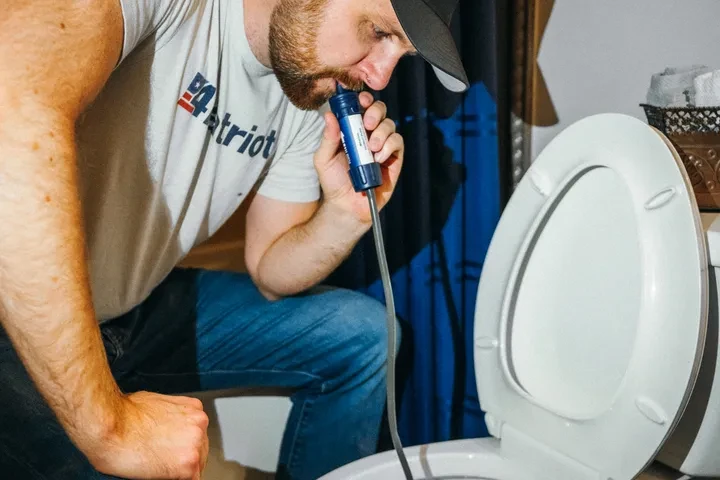
When talking about disaster preparedness, few groups have as deeply rooted a cultural commitment as the Church of Jesus Christ of Latter-day Saints, commonly known as Mormonism. End-times readiness is baked into the faith’s core identity: being a Latter-day Saint explicitly means believing in, and preparing for, a future apocalypse. That context is what brought me, on a mild September morning, to the edge of American Fork, a small town just outside Salt Lake City, where I knocked on the door of Tyler Stapleton. Stapleton is lead product engineer for off-grid power systems at 4Patriots, one of the largest companies pushing mainstream preparedness to U.S. consumers.
LDS members hold outsized influence in this multibillion-dollar global industry, a space where politics and technology collide, and sales are driven by everything from social media and conspiracy theories to the very real rise of global instability.
Stapleton is a mild-mannered, slightly sheepish mechanical engineer with degrees from Brigham Young University, who lives with his wife and three young children. Their neat, orderly home features a large wall clock, a bright open kitchen, and a copy of the Book of Mormon on a living room shelf. After quick pleasantries, Stapleton walked me through his company’s newest products and prototypes, including a slim, “James Bond-esque” solar generator that folds up to fit in a briefcase.
Throughout the tour, he stuck closely to 4Patriots’ official brand messaging: the average buyer of one of the company’s power units is not a camouflage-clad extremist planning to hole up in a bunker for weeks on end, but an ordinary family parent chasing “energy independence” for the occasional blackout or grid failure. It was a polished, well-crafted talking point—though it lost a bit of its shine an hour later, when Stapleton accidentally let slip that his childhood home, just a short drive away, does in fact have a small family bunker. After a moment of hesitation, he agreed to take us there.
Today, the U.S. government officially recommends all households assemble a disaster kit and make emergency plans for a range of catastrophic events. A 2023 Federal Emergency Management Agency survey found that 51% of Americans have at least some level of disaster preparation. That trend helps explain why the preparedness industry is projected to hit a nearly $300 billion market cap by the end of this decade.
Two of the biggest players fighting for a slice of that market have nearly identical names and sell the same core lineup of goods: solar generators, freeze-dried emergency food, and water filtration systems. There’s Stapleton’s employer, 4Patriots, and its top rival, My Patriot Supply. While exact revenue numbers are hard to confirm, My Patriot Supply representatives told me that before the COVID-19 pandemic, the company rented just a portion of a 45,000-square-foot facility. Today, they own and fully occupy a 428,000-square-foot warehouse located just a short drive from Stapleton’s home.
The two companies aggressively compete to claim the title of the prepping world’s “authentic” patriotic preparedness brand, with one My Patriot Supply executive calling 4Patriots their “archenemy.” My Patriot Supply has taken a particularly combative tone, labeling 4Patriots and other rivals “fake patriots” in promotional videos.
Over the years, both companies have accumulated hundreds of consumer complaints filed with government and industry watchdogs. 4Patriots customers have alleged the company sells faulty water filters, defective generators, and low-quality emergency food. One customer reported finding roaches infesting their order, while another said the company’s Aztec Chili with Mango left them too sick to leave the bathroom for a full week. (A representative linked to 4Patriots responded to the complaint on the Better Business Bureau’s website within a day, writing, “I'm so sorry that you had many issues after consuming the survival food kits.”)
In 2016, 4Patriots voluntarily recalled a couple thousand generators over an unanticipated fire risk, and ongoing consumer complaints claim the company’s generators still suffer from potentially dangerous electrical flaws. After lab testing 4Patriots’ 1,800-watt solar generator, Consumer Reports gave it a score of just 46 out of 100. While recalls and negative reviews are common across many industries, 4Patriots and its competitors explicitly market their goods as ultra-reliable when disaster strikes—making quality issues far more consequential.
In a statement to WIRED, a 4Patriots representative said the company has shipped more than 5 million products to customers over the past three years, and that it puts “product quality and customer safety above all else.” The company declined to share specific return or refund rates, arguing that equating those numbers to “product failure or customer dissatisfaction would be inaccurate.”
Stapleton for his part spoke confidently about 4Patriots’ latest line of generators. We ended our tour of his home in the kitchen, where he offered to demonstrate the company’s AlphaCase, a briefcase-sized generator that he claimed was “powerful enough” to run his household refrigerator. As he pulled it out from its spot against the kitchen wall, he talked excitedly about major leaps in battery technology driven in recent years by companies like Tesla. “It’s competitive, and that’s a good thing,” he said. “There’s a lot of people pushing the envelope on what’s possible. And so we are working hard to stay ahead of that.”
When the moment of truth came, Stapleton unplugged his fridge and connected it to the 4Patriots power pack. It hummed quietly for a few seconds, then let out a sharp beep. A warning message popped up on the unit’s display screen. “That’s just the overload message,” Stapleton explained awkwardly, adding that this specific model— which he’d just said could power a fridge, and which the company’s website also claims can handle the load— is “a little bit small for powering fridges.”
When Mormon pioneers first fled west to the Utah Territory in the mid-1800s, they saw prepping as a way to survive and maintain autonomy amid government persecution. They built a self-sustaining off-grid community, with the church running its own bank, printing its own currency, and organizing a militia.
In an October 1980 address to thousands of attendees in Salt Lake City, then-church leader Ezra Taft Benson laid out a more modern, practical framework for preparedness. An experienced farmer, Benson had led the restart of Mormon missionary work in Europe after World War II. In his speech, he recalled the “terrible physical and social side effects of hunger” he saw in the war’s aftermath, his voice breaking with emotion. “Too often,” he said, “we bask in our comfortable complacency and rationalize that the ravages of war, economic disaster, famine, and earthquake cannot happen here.”
Mormons are far from the only American group with a cultural focus on preparedness: Boy Scouts working toward their Eagle Scout rank have long been required to earn an Emergency Preparedness Merit Badge. In their 2024 book Be Prepared: Doomsday Prepping in the United States, authors Robert E. Kirsch and Emily Ray trace how American prepping has long been tied to consumerism, with marketers selling the idea that you can “buy your way to safety.”
Today, the list of routine potential crises Americans face feels endless: extreme heat, grid failure, crop collapse, water contamination, climate-fueled natural disasters and disease outbreaks, government shutdowns, political corruption, armed militia activity, mass shootings, and for 2026, looming regime change in Latin America. It also feels like every few years, a large asteroid narrowly misses our planet.
Founded in 2008, 4Patriots initially focused exclusively on emergency food, targeting customers who started stocking up on rations after Barack Obama’s first presidential election. Its unlikely founder is Allen Baler, who has an English degree from Harvard—Obama’s law school alma mater— and a background in corporate marketing, a background that My Patriot Supply has mocked in YouTube skits. The skits feature a Baler-like character in a branded Harvard half-zip sweater, who uses “scarcity” tactics and other cynical sales tricks to move products.
The public face of the company in its early days was Frank Bates, a polished spokesman and Vietnam veteran living near Nashville, Tennessee, who wrote about how Obama’s policies had harmed his family, his business, and the country. He pushed a range of government conspiracy claims, including one that FEMA was hoarding food because “it knows that if you control the food supply, then you control the people.” When 4Patriots expanded its product line into power supplies, the company teased the “dirty little secret that President Obama and the big energy monopolies have been trying to bury.”
4Patriots once described its core customer base as “55+ year-old conservatives in ‘red’ states with a strong sense of self-reliance.” Baler first reached this audience in 2011, buying ad space on the then-up-and-coming conservative news outlet Newsmax, which he described as a hub of “affluent, conservative men who surprisingly like to buy a lot of stuff online.” He later expanded his advertising to National Review, Glenn Beck’s conservative network The Blaze, and eventually Fox News, which has repeatedly promoted 4Patriots products on air.
In 2014, the progressive outlet ThinkProgress alleged that Frank Bates was not a real person. Reporters could find no one matching Bates’ name and background living in Nashville, and eventually discovered his headshot was a stock photo labeled “friendly man with arms crossed.” 4Patriots denied any deception, and even today occasionally releases materials signed by the mysterious Mr. Bates. (On the company’s FAQ page, 4Patriots assures long-time customers that Bates is real, but uses a pen name “to protect his privacy.”)
In recent years, 4Patriots has toned down its partisan rhetoric, presumably to reach new customer groups like eco-conscious off-grid enthusiasts, sports tailgaters, campers, and people living in hurricane or tornado zones. Even so, Stapleton says the company’s customer base still includes “a lot of conservative individuals.”
Both leading patriotic prepping companies promote their products through traditional TV ads and active YouTube channels. My Patriot Supply also produces podcast-style content about the various threats that make a prepping mindset necessary, while 4Patriots launched 4Patriots University, a series of weekly preparedness masterclasses taught by Seth Weller. Weller is a lean former Boy Scout (and later scoutmaster) who has worked in the preparedness space for 25 years.
Weller insists his curriculum focuses solely on building emergency plans and community support networks, not just pushing company products. He argues that too many Americans treat prepping as a form of “retail therapy,” buying gear to ease their anxiety without learning the skills they need to actually use it when disaster hits.
Weller’s decades of work on the frontlines of American prepping have given him sharp insight into the emotional factors driving the trend. In his view, most of his clients have experienced some kind of devastating personal loss: grief, the death of a loved one, or a destructive storm. “It’s not necessarily some major catastrophic event, but it’s something that changed their lives,” he told me. “And in that process, they realized that this happened because, well, they had a dependency. And then they turn around, like, ‘I don’t ever want to feel that again.’ So, they realize they have to gain some control. They’ve got to gain independence.”
When I asked Weller what drew him into the prepping world, he didn’t point to a natural disaster— he pointed to the sudden, painful collapse of his own business: a luxury portable restroom and shower trailer company. He seems genuinely committed to helping people find calm amid their anxiety, arguing that community networks and practical skills are far more useful than just gear from prepping companies, which Weller openly admits doesn’t always work as advertised.
Unprompted, Weller brought up the hypothetical example of a faulty generator, bought under the assumption it can power key household appliances, only for the power to go out and the owner discover the product “doesn’t work.” Unaware of the failed demo I’d just watched in Stapleton’s kitchen, Weller claimed 4Patriots has risen above this low-quality consumerism. “It’s not just about selling products for us,” he assured me. “It’s about truly helping them out.”
One of Weller’s long-time protégés is Gary Eiler, an Air Force veteran who was caught in the middle of Hurricane Michael in the fall of 2018. At the time, Eiler owned an 800-unit climate-controlled storage facility called HBO Storage (short for Home, Business, Office) in Panama City, Florida. Michael was originally predicted to hit Louisiana, but it shifted north at the last minute, rapidly intensified into a Category 5 storm, and barreled straight toward Panama City, where Eiler was standing watch.
As winds hit 160 miles per hour, the storm tore the roof off Eiler’s business like opening a sardine can. Then the walls began to collapse. Eiler took cover under a bolted-down service counter, where he huddled for more than six hours. “It was very emotionally trying,” he told me.
After the wind died down, Eiler couldn’t stop thinking about a question Weller had asked in a class he took before Weller joined 4Patriots: “How long do you have in an emergency before societal breakdown ensues?” Eiler says Panama City fell into chaos just 20 minutes after the storm passed. Crowds of people began looting local businesses, including a Goodyear auto shop, a local rent-to-own store, and a grocery chain called Food City. That night, Eiler slept in the ruins of his business, with the sounds of screams and gunfire cutting through the dark. (News reports confirm the storm caused massive infrastructure damage and killed 19 people. There were widespread reports of armed looting, and widespread fear across communities that led a Florida state trooper to shoot and kill a civilian who allegedly tried to steal a law enforcement vehicle.)
Eiler spent two months camped out at his destroyed store, guarding his customers’ belongings with a stern demeanor and a Taurus pistol. For the first two weeks, he collected and filtered water from the remaining intact section of his roof and ate freeze-dried food, remembering Weller’s specific instructions for preparing it to avoid constipation— “you don’t want to deal with that in an environment like the one I was in,” he noted, since he was using a bucket as a toilet. Eventually his brother managed to drive into the city in an RV loaded with food, clothes, extra weapons, and other survival gear from Weller and friends. “It was a war zone,” Eiler said. “I’ve only been to Panama City two other times since the storm because of the anxiety it brings me. And that’s because my sister lives here.”
Another top student of Weller’s at 4Patriots University is Bill Knapp, whose prepping obsession was shaped by an event that never actually happened. In 1998, Knapp worked at Deloitte, where he helped the firm prepare for the Y2K bug, a job that first showed him how fragile the national power grid is. Ahead of the 2000 New Year, Knapp stocked up on water and food and bought a generator. No major outages materialized, but a few years later, a hurricane hit his Long Island community and knocked out power for 10 days, confirming his fears.
Knapp found 4Patriots three and a half years ago, when he did a routine Google search for a cell phone charger and stumbled on the company’s solar portable charger. Today, he estimates he has spent roughly $60,000 on prepping, most of it going toward building an off-grid tiny home, with more than $7,000 of that total spent on 4Patriots gear. He pushes back against criticism that preppers are hoarders: “people accuse you of hoarding, but I'm not hoarding. I’m investing,” he says.
Along the way, Knapp brought his new wife Pat into the prepping lifestyle. One of the first gifts he gave her while they were dating was a 4Patriots emergency kit for her car trunk, stocked with thermal blankets and food in case of an emergency on Interstate 95. When the couple got married last summer, they gave many of their wedding guests small 4Patriots device chargers as favors. The couple has since turned the front lawn of their Maryland home into a flower garden to support pollinators, and grow pesticide-free vegetables in their backyard. After they learned their local water supply had been contaminated with PFAS (“forever chemicals”) by the company that makes Gore-Tex fabric, they bought a 4Patriots water filtration system.
Even with all that, Pat is more cautious about prepping than her husband. Specifically, she dislikes the constant state of vigilance that prepping culture requires. “Because of 4Patriots, whenever we go anywhere, we’re assessing,” she told me, describing the constant hyperawareness that now shapes her life. “If it was not for 4Patriots, I would not be thinking this way. What are we taking? Are we going to a crowd? Are we staying away from a crowd? It’s dangerous to be out on the road, it really is. But we try to enjoy our lives. We try to balance—and we talk about this—how to balance out our negative vibes.”
Pat is particularly troubled by the inequality that shapes disaster response, and the hard choices preppers fear they will face during a major crisis. “I’m not so sure I’m gonna be strong enough to turn somebody away if they need food,” she says. She continues: “I’ve just started learning how to shoot. And I’m thinking, am I gonna be able to pull a gun out and shoot somebody because they’re trying to … ”
“Steal from us,” Bill finishes.
“… steal from us,” Pat echoes. “Or hurt Bill. These are the types of things we discuss in the chat rooms.”
Fear of nuclear annihilation drove the earliest boomer preppers, while many younger preppers point to 9/11 as their catalyzing event. Other major milestones in modern prepping history include Hurricane Katrina, the 2014 Ebola outbreak, and then in quick succession, the 2020 COVID-19 pandemic, the 2021 Texas grid failure, and Russia’s 2022 invasion of Ukraine. Executives from both Patriot companies told me that presidential elections also reliably boost sales. One executive explained that after Donald Trump won reelection in 2024, “we knew that sales were going to pl
The $300 Billion Prepping Industry Built on Mormon Tradition and American Anxiety